The right Murphy bed depends on how often you'll open it and what the room does all day. If you'll sleep in it nightly, choose a sturdy wall bed with a mechanism that's easy to operate and a desk or sofa that doesn't have to be cleared first. For a room with a low ceiling, choose a horizontal model. For occasional guests, a simpler cabinet bed can save money.
First, what do you need the room to do?
- Office by day, guest room sometimes → wall bed with desk.
- Living room by day, bedroom every night → wall bed with sofa.
- Low ceiling, garage conversion, or under the eaves → horizontal wall bed.
- Occasional guests, tight budget → cabinet bed.
The types, compared
| Type | How it works | Best for | Watch out for |
|---|---|---|---|
| Vertical wall bed | Bed folds up along its length | Standard ceilings, queen sizes | Needs full ceiling height and floor length in front |
| Horizontal wall bed | Bed folds up along its side | Low ceilings, twins and fulls | Takes more wall width |
| Wall bed + desk ("desk-stays") | Bed folds down over a desk that stays level | Daily office + guest room | Higher price; check clearance above the desk |
| Wall bed + desk ("clear-first") | Desk folds flat or must be cleared before the bed comes down | Occasional guests | You'll tidy the desk every time |
| Wall bed + sofa | Bed folds down over or in front of a sofa | Studios, ADUs, nightly use | Sofa depth adds to the footprint |
| Cabinet bed | Freestanding cabinet unfolds into a bed | Rooms where the specified installation is suitable | Thinner mattresses; check comfort |
| Manually operated wall bed | Lifted and lowered without powered assistance; mechanisms vary | Households comfortable with the required effort | Ask the manufacturer about lifting, locking, and installation |




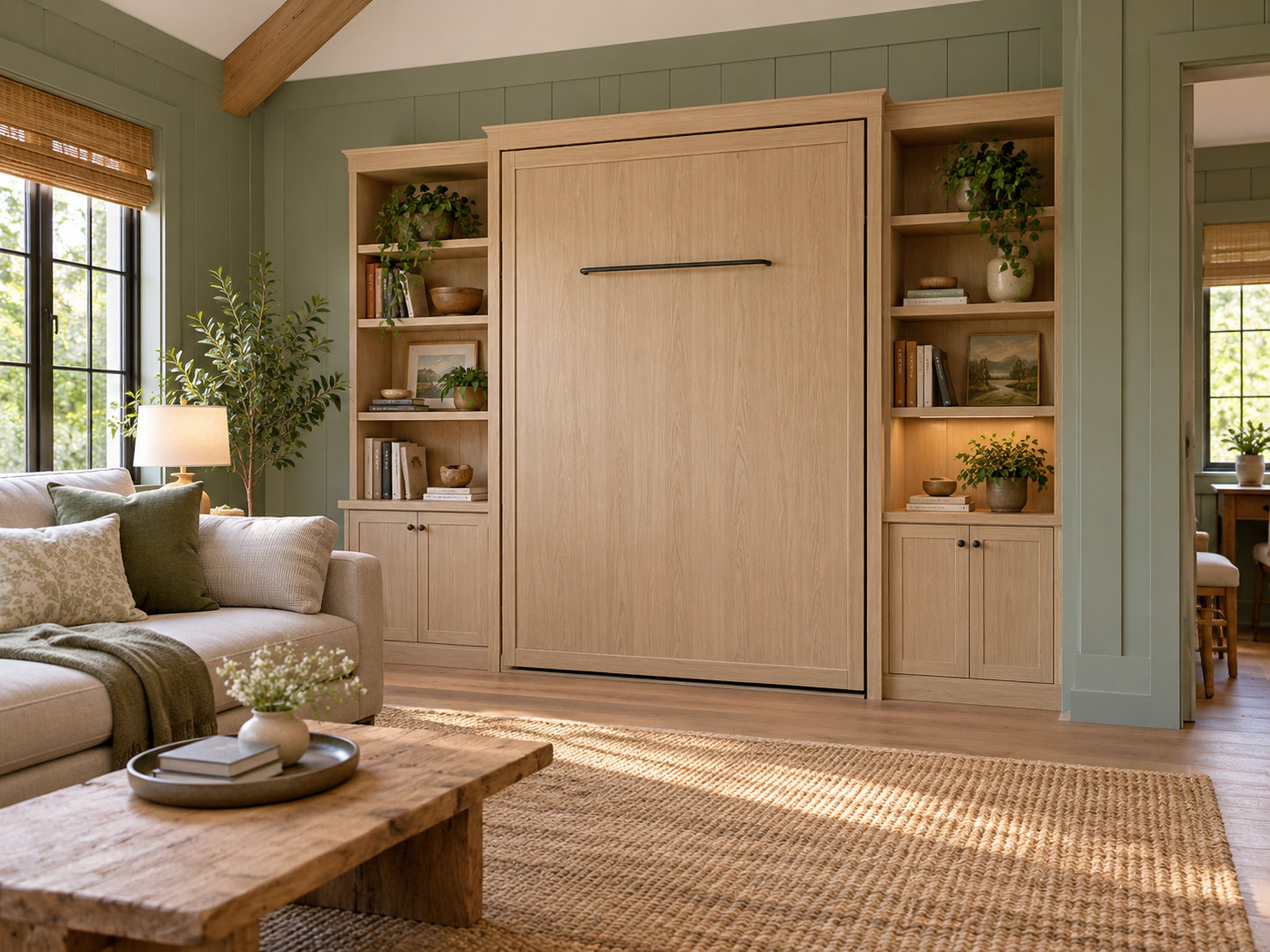

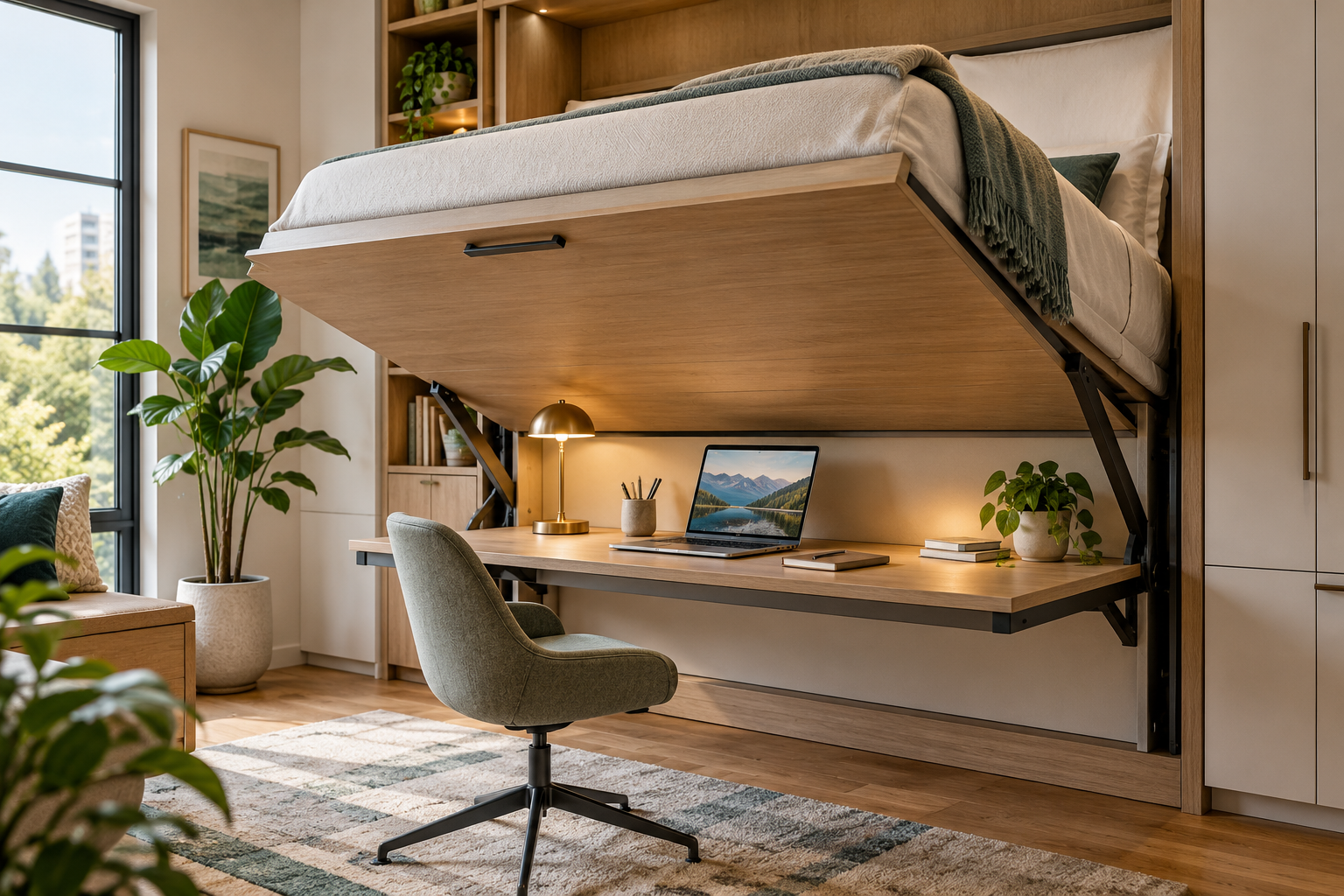
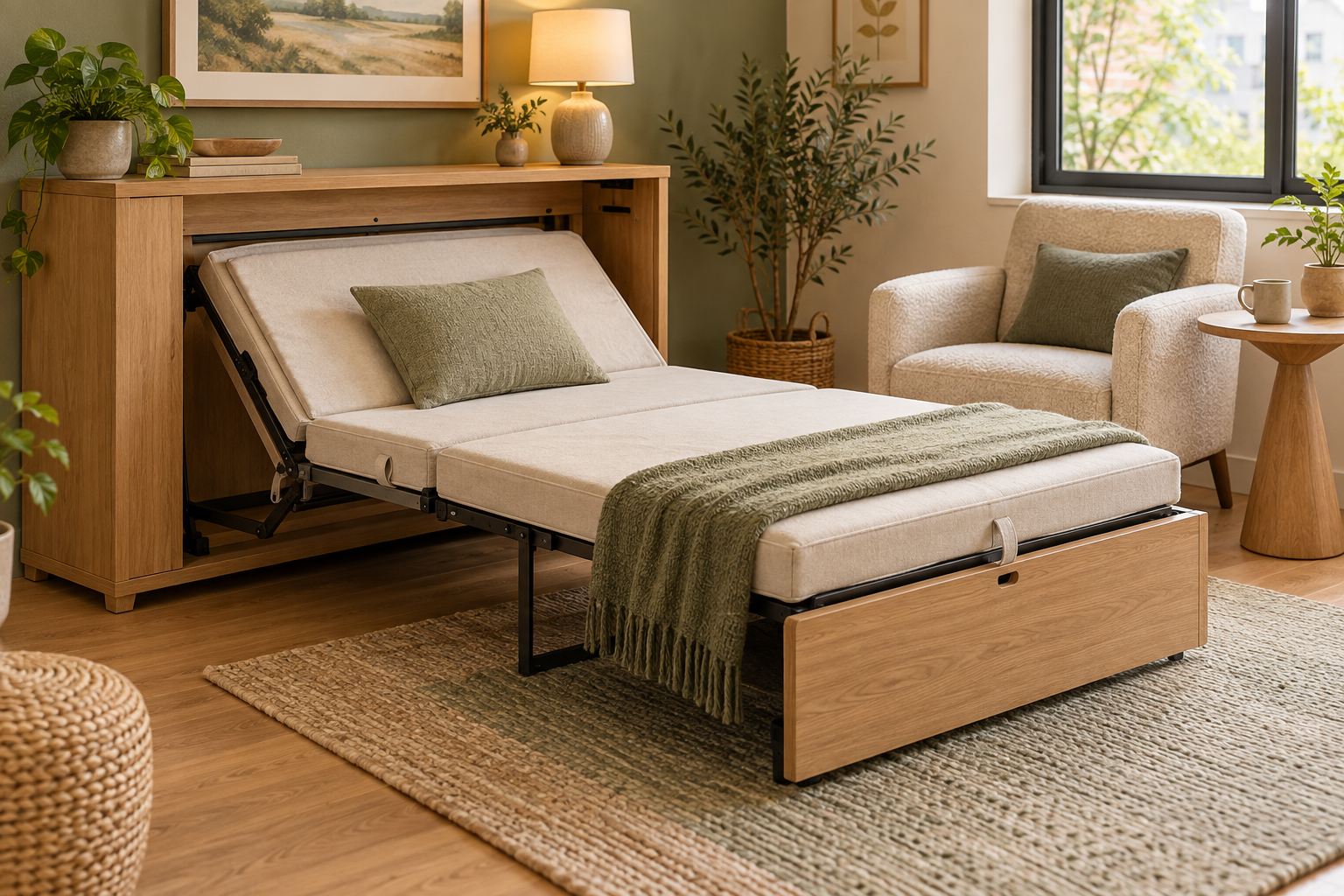
The "desk-stays" versus "clear-first" distinction matters more than any finish or color. If the room is your daily office, pay for a desk you don't have to empty every night.
Compare the way it works
Try the opening and closing sequence if you can. Ask for the current installation manual, the complete open and closed dimensions, the permitted mattress weight, and details of any locking mechanism. Check whether the desk stays level and what must be moved each time.
For a secondhand bed, identify the exact model and check CPSC recall information before purchase. Installation and anchoring are part of choosing the bed, not an afterthought.
Before you buy: the measuring checklist
- Ceiling height for vertical models, including crown molding, sloped ceilings, and light fixtures.
- Wall width for horizontal models.
- Floor clearance in front: the full bed length, plus room to walk around it.
- Wall construction. Most wall beds must be anchored into studs or solid wall. Renters should consider cabinet beds.
- Mattress limits. Wall beds specify a maximum mattress thickness and weight. Buy the mattress to fit the bed, not the other way around.
- What's on the wall. Outlets, switches, vents, and baseboards all affect installation.
- Delivery and install. These are heavy. Check stairs, doorways, and whether professional installation is included.
Are Murphy beds comfortable enough for every night?
Many are designed for nightly use and take standard mattresses within their thickness limit. Comfort comes down to the mattress you choose and a stable, well-anchored frame. The bigger question is operation: if the bed is hard to open, you'll stop closing it, and the room stops transforming.
Who shouldn't buy one
- If you'll never close it, buy a good regular bed with storage drawers instead.
- If the required anchoring cannot be installed, do not use that wall bed. Investigate a different design and its installation requirements.
- If the ceiling is low, compare the full operating clearances of horizontal and vertical models before deciding.
Frequently asked questions
What's the best Murphy bed for a low ceiling? A horizontal wall bed, which folds up along its side instead of its length. Check the exact open and closed dimensions of the model you are considering.
Can you use a Murphy bed desk without clearing it? Only with a "desk-stays" design, where the desk stays level as the bed folds down over it. "Clear-first" designs require emptying the desk first.
Do Murphy beds need to be attached to the wall? Most wall beds must be anchored to studs or a solid wall for safety. Some cabinet beds are alternatives, but follow their specific anchoring and installation instructions too.
Can you use a regular mattress in a Murphy bed? Usually, as long as it's within the manufacturer's thickness and weight limits. Check the specs before buying.
Are Murphy beds good for ADUs? Yes. They let a studio or one-bedroom ADU function as a bedroom at night and a living room or office during the day.
Make room for your own life.
Use the free Right-Sized Planner to list your activities, match them to the 7 Moves, and decide what comes first.
Get the Free Planner
Founder of Right Sized Intelligent Living and Sightline Homes. More than 25 years in architecture and real estate development inform her approach to spaces that work harder and feel easier.